Rethinking Workplace Well-Being Through Parents’ Realities
UX Research
MIIPS, Carnegie Mellon University
Overview
This project explored how remote-working parents experience well-being, and how organizations can design workplace structures that effectively support them.
While many companies invest in wellness programs, few consider the unique emotional and logistical challenges that parents face daily. Our goal was to uncover these realities and reframe well-being not as a benefit, but as a foundation for inclusive and sustainable work.
Why it matters
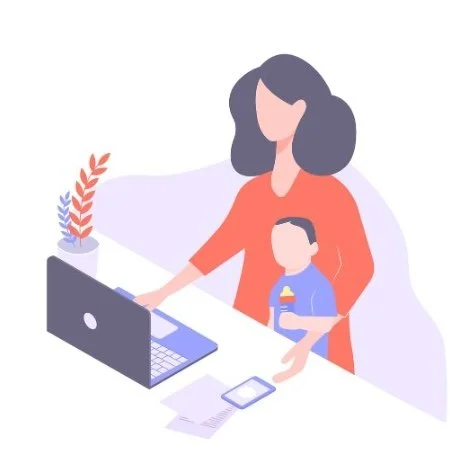
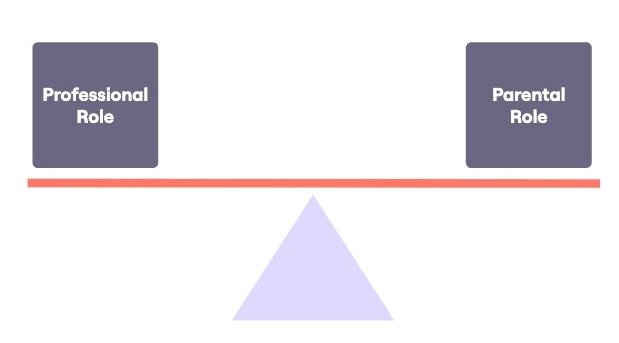
Remote work has blurred the boundaries between professional and caregiving roles.
We believe this research could be a catalyst for change. Supporting working parents could improve the workplace for everyone.
Methods
A mixed-method qualitative exploration combining digital ethnography and semi-structured interviews.
Methods used:
Desk research on stress and role conflict among remote-working parents.
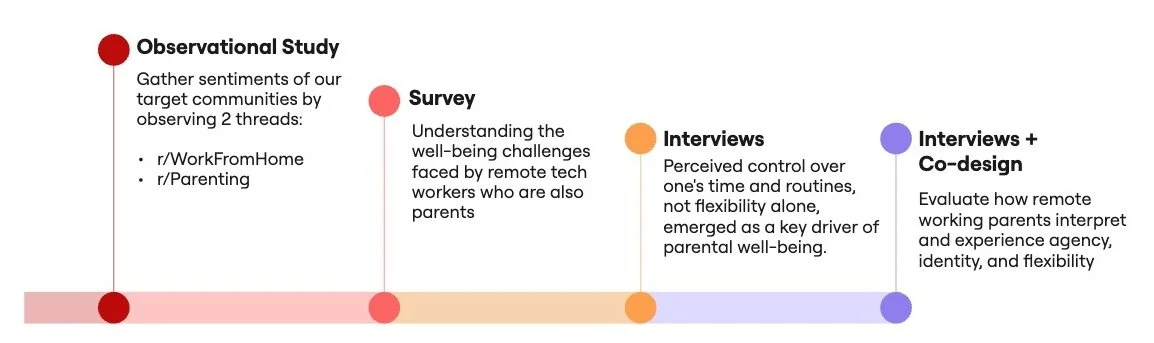
Observational study in online parenting and remote-work communities.
Survey exploring guilt, productivity, and emotional strain.
Eight in-depth interviews (4 women, 4 men) to capture diverse experiences.
Co-design sessions where parents reflected on care systems and workplace policies.
This process helped us evolve from studying “flexibility” to understanding “control” as the real driver of well-being.
Tools:
Miro · Zoom · Google Sheets
Learnings
Control, not just flexibility, defines well-being.
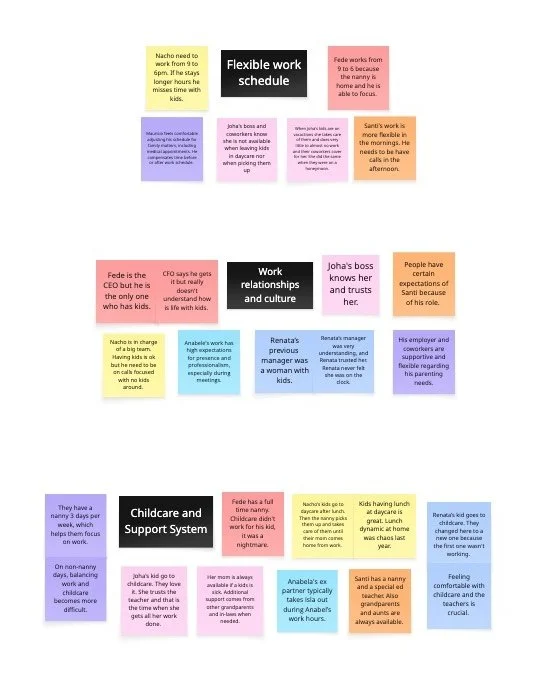
Parents constantly adapt their routines, seeking to maintain control through support systems, childcare, partners, and flexible jobs, in order to preserve their sense of identity.Trust and agency matter more than convenience.
In childcare, emotional safety and trust in caregivers outweighed logistical ease. Parents want flexible parental-leave programs that fit their unique realities.Flexibility can create new emotional strain.
While remote work offers freedom, it can also blur boundaries and amplify guilt when children get sick or when availability expectations rise.Emotional safety is a workplace asset.
Boundaries are both emotional and logistical. When organizations value psychological safety, they strengthen productivity and long-term engagement.
Key Insights
Hidden leadership skills, visible well-being needs
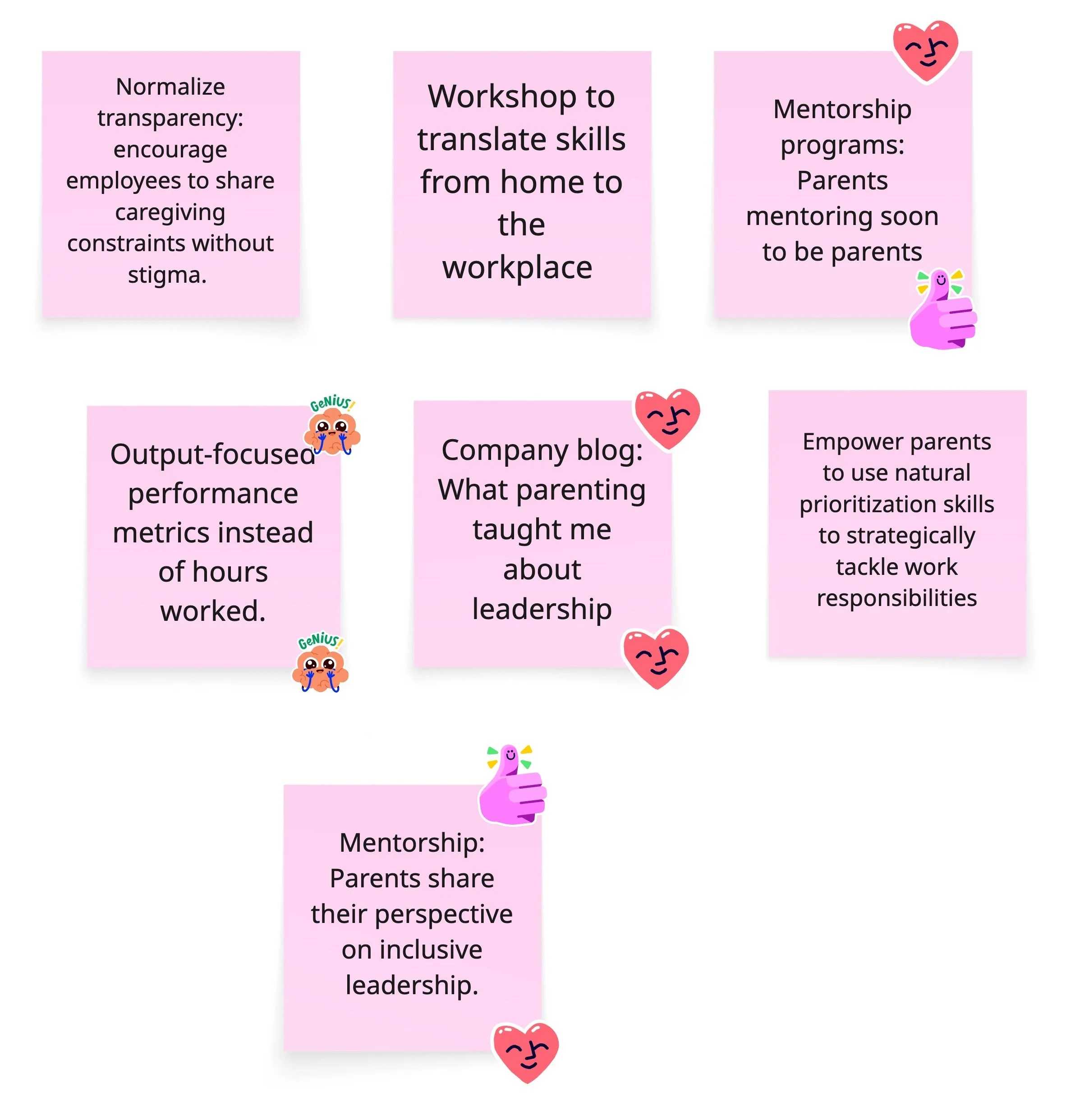
Parenting develops adaptability and prioritization, essential leadership traits that flourish in flexible environments.Redefining boundaries
Emotional safety enables sustainable productivity and prevents burnout.Trust-centric support systems
Parents value reliability and emotional connection in care networks over corporate “backup care” perks.Adaptive leave as a retention strategy
Flexible, modular leave programs can improve retention and inclusion beyond early parenthood.Parents reveal universal workplace flaws
The inefficiencies that frustrate parents often affect everyone. Designing around their needs improves work for all.
User persona and journey
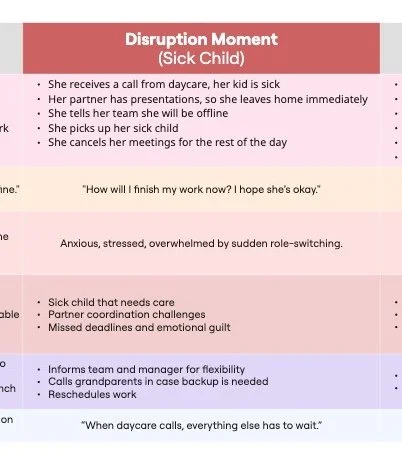
Juana represents the remote-working parents we met:
She balances professional ambition with family care, striving to be both a great employee and an attentive parent.
Her ability to plan, prioritize, and adapt demonstrates how parental skills translate into leadership potential.
A day in Juana’s life mirrors that of many remote-working parents, morning routines, meetings, caregiving moments, and evening wind-downs.
But disruption moments, like a sick child or unexpected school call, trigger stress and identity conflict, showing the need for structures that allow flexibility without penalty.
Opportunities for Organizations
Our findings highlight four key drivers shaping parental well-being at work:
Emotional safety and trust in care networks
Flexible work structures that adapt to family rhythms
Autonomy to organize one’s day
Recognition of skills developed through caregiving
We see a clear opportunity: transform parenting into organizational strength.
By designing trust-based, flexible solutions that give parents autonomy and recognize their skills, companies can create workplaces ready for the future.